Bleached Corals Recover After Touching Healthy Clones
Five source-backed reports: coral recovery, an early flightless bird, ultra-cold alloys, milk-derived antibodies and a Mars rover milestone.
Image supplied for editorial illustration; not verified as a photograph of the cited experiment.
Verified discoveries
01 · Science Advances · 14 Oct
Coral rescue through direct contact
In controlled laboratory experiments, bleached Pocillopora damicornis fragments recovered within eight weeks when touching healthy fragments from the same genetic individual. A tissue bridge enabled transfer of algal symbionts. Brief contact could initiate recovery; fragments separated by a few millimetres did not recover in the reported comparison.
Measured: recovery and symbiont transfer. Inferred: prospects for reef restoration; field-scale success has not been demonstrated.
Yuezhuornis yangyuanensis, from Late Jurassic China, had markedly short forelimbs and an unusual combination of early bird and dinosaur-like skeletal traits. Morphological and phylogenetic analyses support a terrestrial, flightless lifestyle.
Measured: fossil anatomy. Inferred: locomotion and evolutionary pathway; flightlessness is not directly observed.
Researchers tested Nb–Ti-based body-centred-cubic alloys and observed no apparent ductile-to-brittle transition down to 20 K (−253 °C). Twinning and an omega-phase transformation help nucleate dislocations. Toughness and ductility can still change with temperature.
Milk-derived antibodies protect mice against influenza
LCTG-001, a pooled human-milk secretory IgA preparation, neutralized RSV, adenovirus 5 and H1N1/H3N2 influenza in laboratory tests. Intranasal administration reduced influenza illness and lung injury in mouse experiments. Binding to H5N1 components does not establish H5N1 neutralization or protection.
Measured: laboratory and mouse results. Unknown: human safety, dosing and clinical efficacy.
NASA reported that Perseverance reached 45.22 km on October 11, passing Opportunity’s 45.16 km record. Autonomous navigation made much of its travel possible.
Measured: rover odometry. This is a recent mission update, not an October 14 discovery.
Established: Coral contact transfer in laboratory fragments; measured alloy properties; fossil anatomy; laboratory antibody activity and mouse outcomes; NASA rover odometry.
Inferred: Flightless ecology from comparative fossil analysis; possible future applications for coral restoration and cryogenic alloys.
Unknown: Reef-scale deployment, human efficacy of the antibody preparation, long-term service performance of the alloys and commercial utility of diamondiyne.
Editorial policy: no claims of comprehensive 24-hour coverage of physics, AI or archaeology. Stories not independently source-checked were omitted rather than treated as confirmed absences.
Earlier edition · October 1, 2026 · A black hole jet pointed straight at us
EARLIER EDITION · THURSDAY, OCTOBER 1, 2026
A black hole jet pointed straight at us
The Milky Way’s first confirmed microblazar — plus the day’s full discovery brief, read aloud.
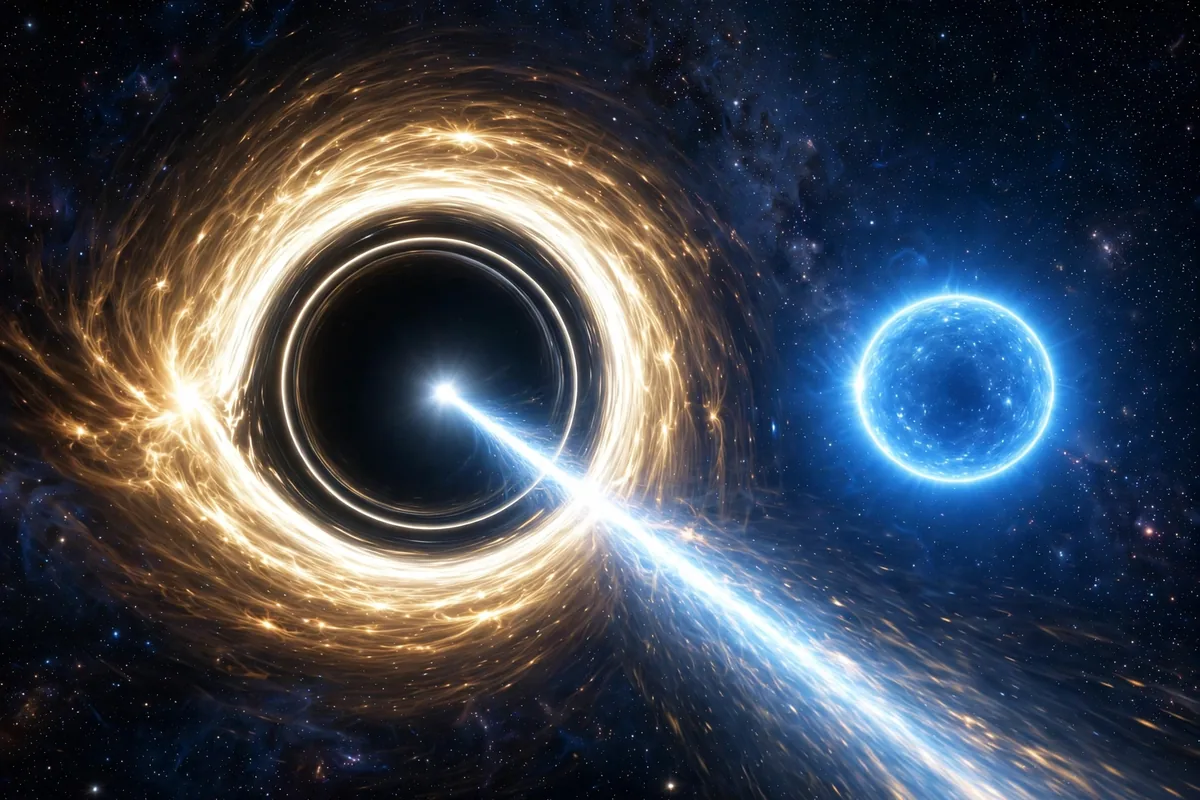
Illustration: the Milky Way’s first confirmed microblazar — a stellar-mass black hole with its jet aimed at Earth.
Press Listen to hear Danny read this story.
Ω NEWS BRIEF
SCIENCE DESK — DISCOVERY REPORT
Thursday, October 1, 2026
OPENING SIGNAL
Good evening. This is the Omega Science News Desk, and I'm Don Sol, with your discovery report for Thursday, October 1st, 2026. Everything below comes from the last twenty-four hours of published science — what was measured, what it means, and what is still unknown. Every major claim carries a tag. [T] means measured and reported. [I] means inferred from the data. [H] means hypothesis. [U] means unverified. Here is what moved.
1. THE BIG DISCOVERIES
A black hole jet pointed straight at us — the Milky Way's first microblazar. Astronomers confirmed IRAS 18293−0941, about 12,000 light-years away, as the first microblazar in our own galaxy [T]: a black hole orbiting a massive companion star once every 11 days, stripping material off it and firing a plasma jet at nearly the speed of light — aimed almost directly at Earth [T]. Microblazars are the small-scale cousins of the supermassive blazars seen in distant galaxies. This one hands us a nearby laboratory for how black holes launch relativistic jets [I].
Thirty entangled logical qubits on a commercial machine. Infleqtion announced it entangled all 30 logical qubits of its Sqale neutral-atom quantum computer into a single quantum state, using only 80 physical qubits, with a signal roughly a thousand times stronger than the underlying noise [T — company-reported]. The key gate operation was discovered with AI assistance and halved the physical gates the circuit needed [T — company-reported]. Their stated roadmap target is 100 logical qubits by 2028 [T — company-stated].
One of Webb's biggest images ever. The James Webb Space Telescope released a massive panorama of the star-forming region IC 348, revealing hundreds of previously hidden background galaxies and record-small brown dwarfs barely twice the mass of Jupiter — objects that challenge current star-formation models [T/I].
2. SPACE / COSMOS
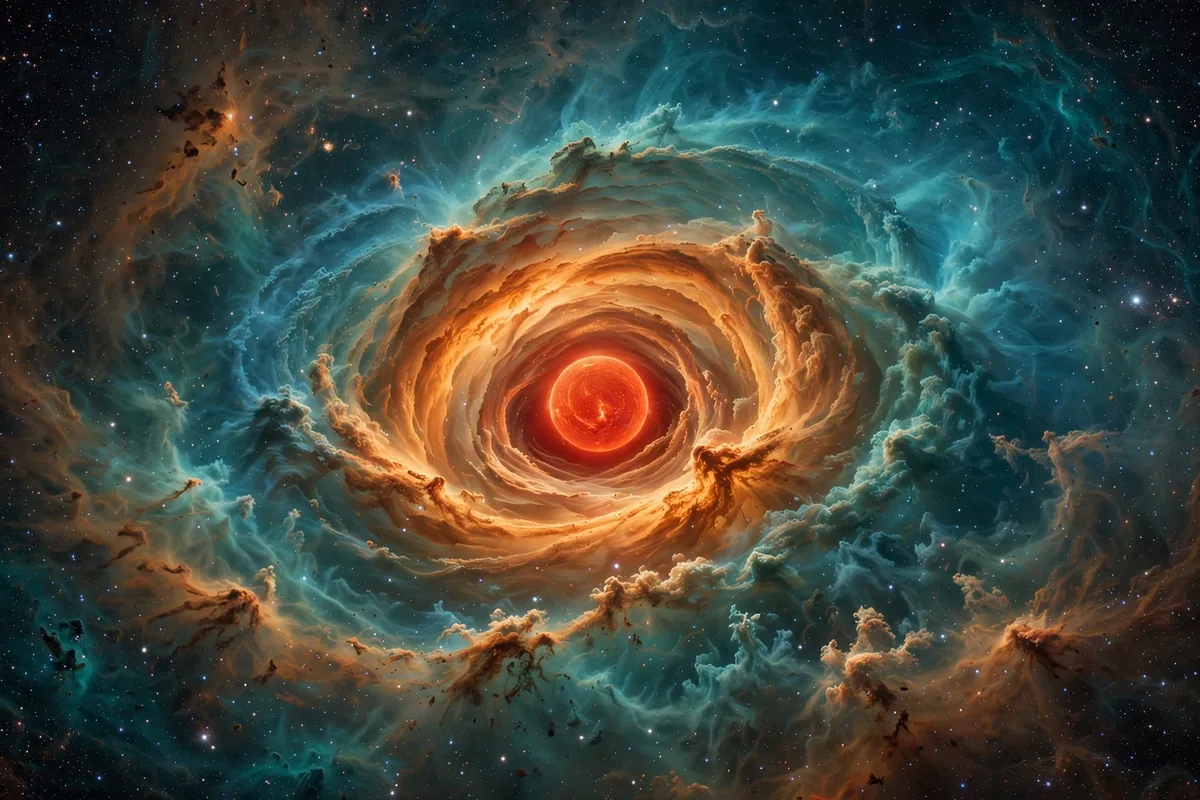
A ghost molecule caught around a dying star. An international team led by the Instituto de Astrofísica de Canarias used JWST to make the first secure detection of the methyl radical, CH₃, around the evolved carbon-rich star SMP LMC 011 in the Large Magellanic Cloud [T]. Methyl radicals carry an unpaired electron and react almost instantly, which makes them extraordinarily hard to observe directly [T]. Catching one in a dying star's envelope opens a new window on the chemistry that seeds interstellar space [I].
Illustration: the dying star SMP LMC 011, where the methyl radical was found.
Black hole jets caught shaping whole galaxies. An Arizona State–led team using ESO's Very Large Telescope made the first confirmed observations of stars forming inside the extreme outflows blasted from supermassive black holes — jets disrupting star-forming gas far beyond galaxies' visible edges [T]. The finding reframes black holes from galactic passengers to galactic architects [I].
3. PHYSICS / QUANTUM
The "dark horse" of quantum computing just went universal. A team from the University of Chicago, Harvard, Stony Brook, and Quantinuum demonstrated a complete set of quantum operations built on non-Abelian anyons — exotic collective states created by entangling conventional qubits — proving for the first time that this approach can support universal quantum computing [T]. Because information in anyons is spread across many entangled qubits, it resists the small disturbances that corrupt ordinary qubits [T]. The result sidesteps the costly "magic state distillation" that consumes huge fractions of conventional quantum machines [I].
Illustration: non-Abelian anyons — particles that remember how they were braided.
4. AI + SCIENCE
AI plus proteomics designs "molecular glues" for immune disease. Researchers combined AI-based protein folding prediction with high-throughput proteomics to discover molecular glues targeting VAV1, a signaling protein implicated in autoimmune and inflammatory disease — starting with no experimental structure at all [T]. Medicinal chemistry produced NGT-201-18, which degraded VAV1 and suppressed T-cell activation in primary human T cells [T]. A path toward targeted treatments for immune diseases that currently have none [H].
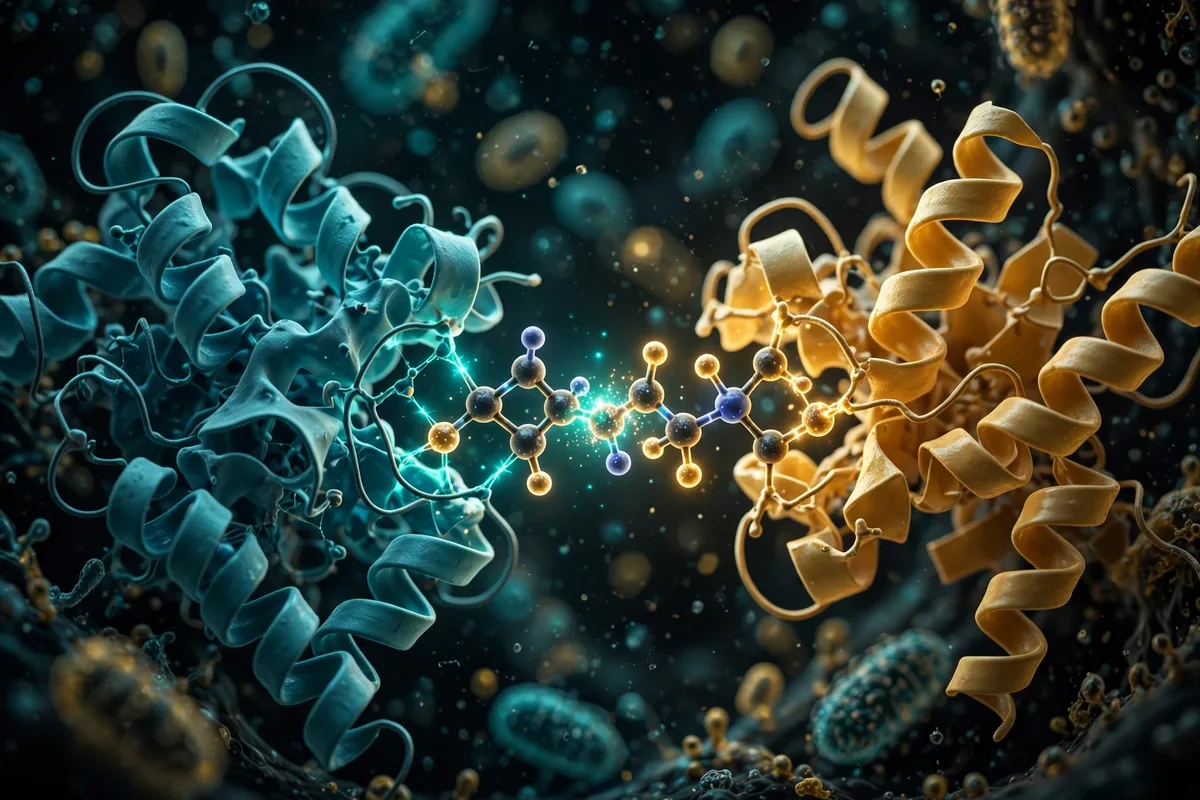
Illustration: an AI-designed molecular glue pulling two proteins together.
An all-AI drug design, independently validated. A virtual biotech of AI scientist agents designed an antibody-drug conjugate against the lung-cancer target B7-H3 using only pre-2025 data. Months later, a pharmaceutical company independently converged on the same strategy — which has since earned FDA breakthrough therapy designation [T]. Independent convergence is about as close to a blind test as drug design gets [I].
5. ENGINEERING / MATERIALS / ENERGY
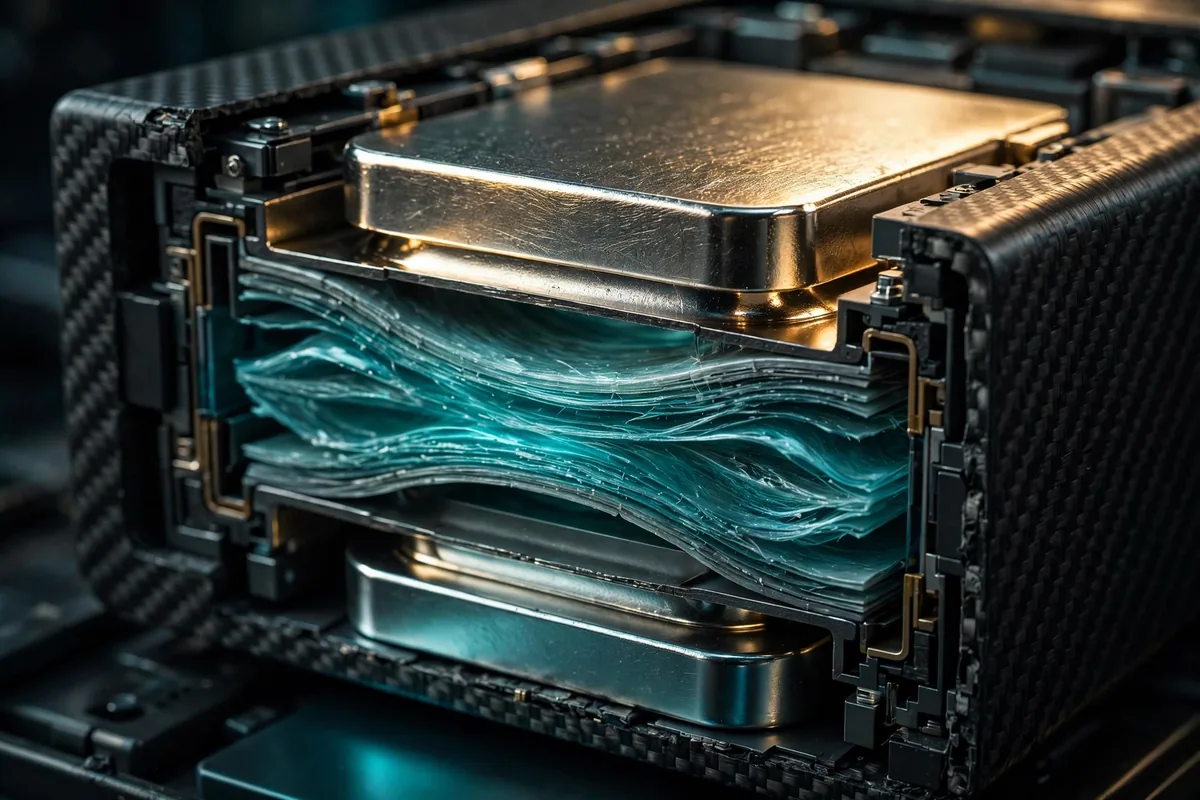
A battery electrolyte that bends instead of breaking. Rice University researchers built ZnBTCA, the first metal-organic-framework electrolyte with a flexible aliphatic carbon-chain backbone [T]. Lithium-metal cells using it ran stably for over 300 hours at rising current with no short-circuiting, and 95 percent of the mobile charge-balancing ions were lithium [T]. Mechanical flexibility is now a design tool for solid-state batteries — not just chemistry and pore structure [I]. Published in Chemical Science.
Illustration: a soft, porous MOF-based electrolyte for safer solid-state batteries.
Claim: China's first hydrogen-boron fusion reaction. The ENN group announced its Xuanlong-50U reactor achieved a hydrogen-boron fusion reaction ahead of its end-of-2026 target, using neutral-beam injection plus radio-frequency waves to boost the fast-proton fraction [T — company announcement]. Hydrogen-boron fusion is aneutronic and its fuel is abundant, but it demands far harsher plasma conditions than deuterium-tritium fusion [T]. No independent verification has been published [U].
Ice that makes electricity, paint that sweats. Strained slabs of salty ice generate small electric currents [T]. And an experimental paint that reflects sunlight, emits heat, and mimics sweating cooled buildings without air conditioning, even in the tropics [T]. Both are lab curiosities with long roads to practice [I].
6. EARTH / LIFE / HUMAN ORIGINS
Africa is tearing open in a way never seen before. Beneath Kenya's Turkana Rift — a hotbed of hominin fossils — the crust is undergoing "necking," a critical transition stage toward continental breakup that researchers say has not been observed this way before [T/I].
Illustration: the East African Rift — the Turkana Basin research ground.
A 1,000-year-old gospel holds ancient disease DNA. Scientists recovered sheeppox virus DNA from the parchment of the York Gospels, written in Canterbury in the late 900s [T]. The virus's genome proved remarkably stable across millennia — unlike smallpox — and the work shows the world's archives may be silent vaults of past animal-disease outbreaks [I]. Sheeppox still strikes today, with an active outbreak causing damage in Greece [T].
Neandertal babies started out just like ours. Two studies of Neandertal remains indicate their newborns were about the same size as modern human babies, but developed faster through infancy [T].
7. THE PAPER OF THE DAY
Hanfeng Lin et al., "Leveraging high-throughput proteomics and AI-based protein folding to accelerate VAV1 molecular glue discovery," Nature Communications (2026). DOI: 10.1038/s41467-026-77657-z.
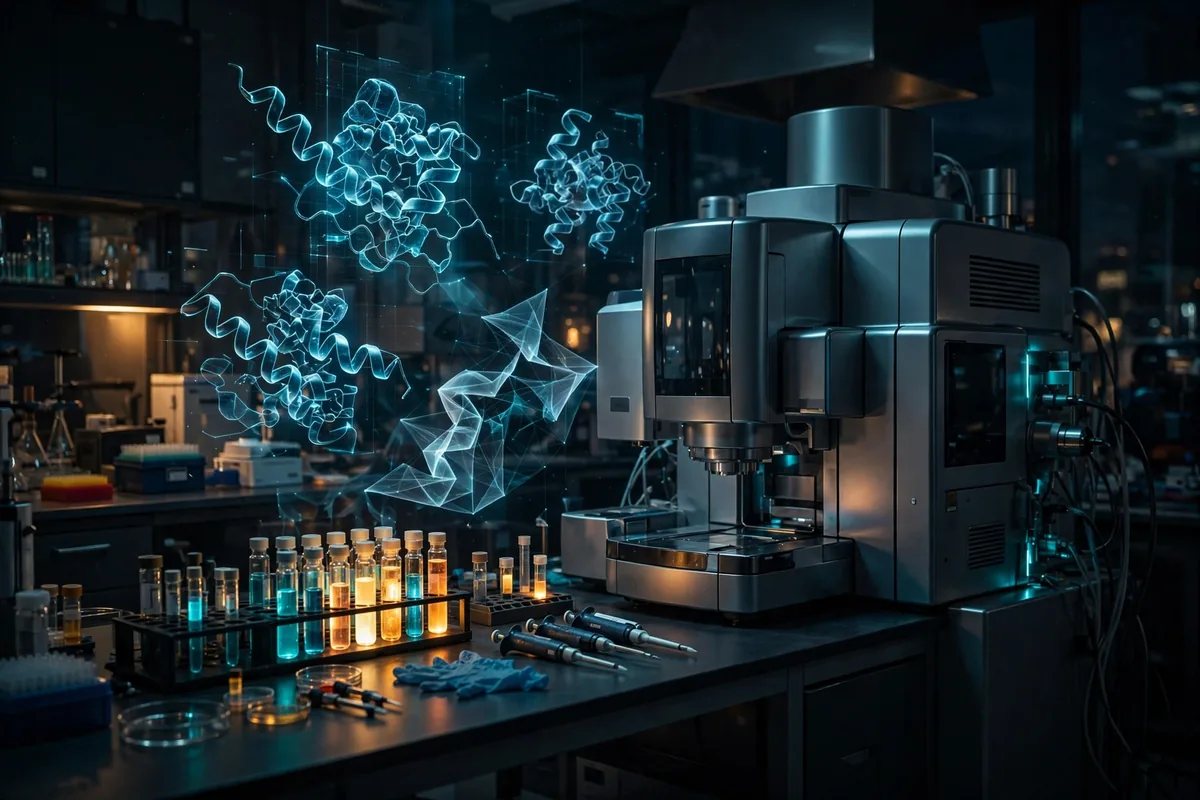
Illustration: the proteomics pipeline behind the VAV1 molecular-glue discovery.
What they did: with no experimental structure in hand, the team used AI folding models to predict how candidate molecules grip VAV1 and the cereblon machinery that marks proteins for destruction, then confirmed the hits with proteomics [T]. What they measured: chlorine-tuned compounds with sharply improved potency; the lead, NGT-201-18, degraded VAV1 and quieted T-cell activation in real human cells [T]. Why it won: it is a working template for AI-led drug discovery at the earliest, hardest stage — before anyone has a crystal structure [I].
8. WHY THIS MATTERS TO YOU
Quantum error correction is the whole ballgame. Anyons that protect themselves, and thirty entangled logical qubits on eighty physical atoms, are steps toward machines that can design drugs and materials we cannot [I]. Solid-state batteries that do not short-circuit are the difference between the EV in your driveway and the one on a poster [I]. Molecular glues for VAV1 could become the first targeted treatments for immune diseases that currently have none [H]. And the archives in your local library may hold the genomes of plagues past — and the clues to stopping the next ones [I].
9. REALITY CHECK
The ENN hydrogen-boron fusion "breakthrough" is a company announcement, not a peer-reviewed result. Treat it as a claim, not a measurement [U]. A "Google quantum breakthrough chip" story circulating this week is a recycled 2024 announcement about the Willow chip — it is not new [T]. Infleqtion's 30-logical-qubit result is company-reported; the signal-to-noise figure and the AI-discovered gate await independent replication [U]. The microblazar and methyl-radical detections are reported discoveries from working astronomers; the interpretations — a nearby jet laboratory, a new window on interstellar chemistry — are the researchers' inferences [I].
CLOSING SIGNAL
That's the brief for Thursday, October 1st, 2026. What was measured, what it means, and what's still unknown. Follow your curiosity. End transmission.
Omega Science News Desk • omegasciencenewsdesk.com • End Transmission
The Arc · Books & Essays
A different kind of journey.
Six illustrated books. Recorded narration. A quiet place to read, listen, and pick up where you left off.
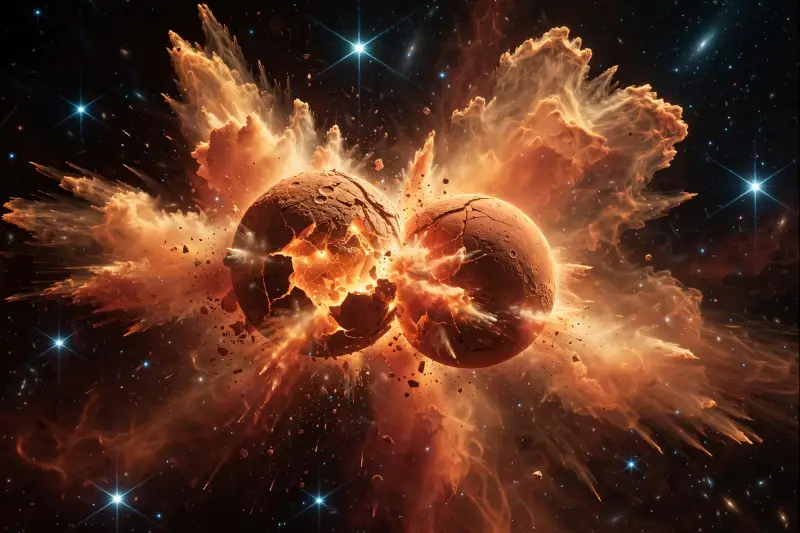
The clearest discovery signal this window is not a new planet. It is a census of the wreckage left when rocky worlds collide. On 1 October, ESA and the Space Telescope Science Institute reported that a team led by Kate Su of the Space Science Institute used the James Webb Space Telescope, with archival Spitzer data, to assemble 21 extreme debris discs. The paper is in The Astrophysical Journal.
These systems hold unusually large amounts of warm dust in the zone where rocky planets orbit. Mid-infrared spectra show smaller grains than ordinary debris discs, high warm-dust concentration, and irregular brightness. About one third of the sample is silica-rich. The team reads silica-rich discs as vaporizing, high-energy impacts between roughly Mars-sized bodies, and only around stars younger than about 300 million years. The other two thirds are silica-poor, consistent with smaller, often grazing collisions that can persist and flicker.
Observable extreme debris discs appear rare: roughly 1 percent of young stars in the data so far. That rarity, plus the age split, is the useful result. Moon-forming violence may be a short, uncommon phase, not the default setting of every planetary system.
Colliding Worldsâ¾
Webb maps the mineral signature of planet-shattering collisions.
WHAT HAPPENED: Su and colleagues compiled 12 newly observed extreme debris discs plus follow-up and archival targets, 21 systems in total. Spectra sort them into silica-rich and silica-poor.
WHY IT MATTERS: Planetary embryos are too small to image directly. Their collision debris is now a measurable proxy for impact energy and composition.
WHAT IT COULD BECOME: A clock for the rocky-planet assembly phase, and a test of whether our own Late Heavy Bombardment left a silica-poor infrared flicker.
WHAT IT MEANS FOR YOU: The Moon-forming impact stops being a unique story and becomes a class of events with a measurable rate.
Roman First Lightâ¾
Roman's coronagraph took its first focused image in space. It is not a planet picture.
WHAT HAPPENED: NASA JPL reported on 30 September that the Coronagraph Instrument on the Nancy Grace Roman Space Telescope opened to cosmic light on 22 September and produced a focused test image after focus adjustment. The instrument powered on 1 September.
WHY IT MATTERS: This is the technology path for blocking starlight so faint planets and disks can be seen.
WHAT IT COULD BECOME: A methodical commissioning sequence toward a dark hole on the sky. NASA expects Roman's first public images in early 2027.
WHAT IT MEANS FOR YOU: Direct images of nearby worlds depend on this hardware working, not on another press render.
Earth's Shieldâ¾
SMILE has started science. The X-ray smile of Earth's magnetic shield is still ahead.
WHAT HAPPENED: ESA said on 30 September that the European-Chinese SMILE mission was declared ready for science on 23 September. The ultraviolet imager released the first full-ring northern-aurora footage since 2008, recorded 24 July, and can now record the ring for about 45 hours at a time. The soft X-ray imager is on and has calibration images of a distant supernova remnant. A clean X-ray image of the magnetopause or northern cusp is not in hand. ESA expects stray earthshine to fall enough by mid-October.
WHY IT MATTERS: Auroras and power-grid risk are the ground footprint of solar wind hitting the magnetosphere.
WHAT IT COULD BECOME: An operational view of the boundary the mission was named for. The UK Met Office Space Weather Operations Centre is already working with the team.
WHAT IT MEANS FOR YOU: Better space-weather timing is an infrastructure problem, not only a sky show.
X-Ray Flashâ¾
Einstein Probe caught a new X-ray transient on 3 October.
WHAT HAPPENED: GCN Circular 45798 from the Einstein Probe team at NAOC reports EP261003a, triggered by the Wide-field X-ray Telescope at 00:14:43 UTC on 3 October. Position: right ascension 307.524 degrees, declination minus 12.936 degrees, about 3 arcminutes uncertainty. A follow-up telescope found an uncatalogued source inside that circle, uncertainty about 20 arcseconds. Telemetry was still incoming.
WHY IT MATTERS: Wide-field X-ray monitors are how short-lived mergers, flares, and magnetar-like events get caught before they fade.
WHAT IT COULD BECOME: A classified counterpart once optical, radio, or gamma data arrive. Source class is unknown.
WHAT IT MEANS FOR YOU: Most violent cosmic events are found by machines that never sleep, then handed to telescopes that can point.
Moon Ironâ¾
Chang'e-6 soil holds a lunar iron phase not previously seen in natural Moon samples.
WHAT HAPPENED: A Chinese Academy of Sciences team led by Haifeng Du reported in PNAS on 16 September, widely circulated again on 3 October, that face-centered cubic gamma-iron dominates metallic iron particles inside two impact-glass grains from Chang'e-6 far-side soil. In 50 examined particles, gamma-iron was 64 percent of one sample and 76 percent of the other. A basalt grain was ordinary alpha-iron. Larger gamma-iron particles held a stable single-vortex magnetic state.
WHY IT MATTERS: Gamma-iron is normally a high-temperature phase. Impact glass appears to have quenched it. It may be an extra recorder of ancient lunar magnetism.
WHAT IT COULD BECOME: A new mineral clock for the Moon's disputed dynamo.
WHAT IT MEANS FOR YOU: Returned dirt is still doing work that orbiters cannot. The magnetic-fossil claim is a hypothesis until more grains are measured.
Brain Circuitsâ¾
One depression diagnosis can hide opposite brain-connectivity patterns.
WHAT HAPPENED: University of Helsinki researchers, release 23 September and reported 4 October, used magnetoencephalography on 263 people with major depressive disorder and 75 controls. They found five functional-connectivity groups, from broadly strong coupling with severe symptoms to weak coupling with milder symptoms, a trauma-linked low-connectivity group, a mixed group, and a strongest-connectivity group marked by substance use.
WHY IT MATTERS: Conflicting depression imaging studies may have been averaging unlike brains.
WHAT IT COULD BECOME: A stratification tool, not a treatment. Personalized psychiatry follows only if the groups replicate and predict outcome.
WHAT IT MEANS FOR YOU: The same label does not mean the same circuit.
Quantum Grapheneâ¾
The physics paper inside this window is materials, not a new particle. Nature, 1 October 2026, carries work by Anna Okounkova, Abigail Sohm, and colleagues on anomalous metal and superconducting phases in rhombohedral graphene.
The claim, as reported from the journal issue, is that ultra-clean, tunable rhombohedral graphene shows an anomalous metal alongside superconductivity, and that reproducibility argues against a simple dirt explanation. If the phase is intrinsic, stacked graphene becomes a controllable bench for the strange metal problem that also shows up in high-temperature superconductors.
This desk has not independently read the full methods. No promotion above a journal-indexed result. No quantum-gravity or room-temperature claim is supported.
Fragmented Forestâ¾
Forest fragmentation changes local temperature, not only carbon totals.
A satellite analysis reported 4 October found that, in tropical and temperate zones, breaking continuous forest into isolated patches raised surface temperature by an amount comparable to the effect of losing forest area. In high-latitude boreal forest the same breakup cooled the surface, because open ground exposed more reflective snow.
Climate accounting that tracks only hectares will mis-state the energy budget.
Moon's Birthâ¾
If you remember one thing: rocky planets announce their violent youth as warm dust, and Webb can now read the mineral dialect of those collisions. About one percent of young stars show it. Silica-rich wreckage looks confined to the first 300 million years.
The Moon-forming impact fits that window. It is evidence of a phase, not a portrait of Theia.
THE PAPER OF THE DAY
Kate Su and colleagues, The Astrophysical Journal, released with ESA/Webb on 1 October 2026. DOI: 10.3847/1538-4357/ae88fe.
Question: what are extreme debris discs, and what collisions make them? Method: mid-infrared spectra from Webb and Spitzer on 21 systems, then mineral sorting. Result: three shared traits â small grains, warm dust, irregular brightness â and a silica split. About one third silica-rich, only under 300 million years, read as Mars-scale vaporizing impacts. Two thirds silica-poor, broader ages, more variability, read as smaller or grazing impacts. Evidence: spectra and sample statistics, not resolved images of the colliding bodies. Limitations: the older silica-poor age bin rests on three discs. The authors say more systems are needed. The Late Heavy Bombardment link is consistency, not a proof. Why it matters: it turns an unseen phase of rocky-planet growth into a compositional measurement.
WHY THIS MATTERS TO YOU
Three threads touch ordinary systems. SMILE is aimed at the solar-wind boundary that drives auroras and can disturb satellites and grids. Roman's coronagraph is the hardware bet behind any future picture of a nearby pale dot. The depression subtypes are a warning against one-scan medicine: opposite connectivity can share a diagnosis, so a single biomarker headline is premature. The Webb disc result does not change a device in your house. It changes the prior on how often Earth-like assembly includes a Moon-making impact. Forest fragmentation is the local item: patch size is a temperature variable, not only a wildlife variable.
REALITY CHECK
WHAT WE KNOW: Webb and Spitzer spectra exist for 21 extreme debris discs. Roman's coronagraph made a focused test image on 22 September. SMILE is in science operations and has ultraviolet auroral-ring footage plus X-ray calibration frames. Einstein Probe triggered on EP261003a. Chang'e-6 impact glass contains gamma-iron. A 263-patient MEG study found five connectivity groups.
WHAT WE THINK: Silica tracks impact energy and body size. Gamma-iron may store lunar magnetic history. Depression groups may explain contradictory imaging.
WHAT WE DON'T KNOW YET: Whether Roman can dig a dark hole deep enough for planets. Whether SMILE will get a clean magnetopause image in mid-October. What EP261003a is. Whether the silica-poor and Late Heavy Bombardment link survives a larger sample. Whether depression subtypes replicate or predict treatment.
CLOSING SIGNAL
If you remember one thing: rocky planets announce their violent youth as warm dust, and Webb can now read the mineral dialect of those collisions. About one percent of young stars show it. Silica-rich wreckage looks confined to the first 300 million years. The Moon-forming impact fits that window. It is evidence of a phase, not a portrait of Theia.
Omega Science News Desk · omegasciencenewsdesk.com · End Transmission
EVOLVED
nature's most extraordinary survivors â tap to watch
▶
This Octopus Can FLY?!
Episode 1 · Dumbo Octopus
▶
The FASTEST Punch in Nature
Episode 2 · Mantis Shrimp
▶
This Animal CANNOT Die
Episode 3 · Tardigrade
▶
The Vampire of the Deep Sea
Episode 4 · Vampire Squid
1 of 4
LATEST EDITION · FRIDAY, OCTOBER 9, 2026
Webb Pinpoints Host of Most Distant Fast Radio Burst Yet
Low-mass dwarf at cosmic noon · patchy water clouds on cold brown dwarf · altermagnet · Bethe strings · bacterial immune sensor · read aloud
TAP TO COLLAPSE▾
OPENING SIGNAL [T] Astronomers using MeerKAT and the James Webb Space Telescope localized FRB 20240304B to a low-mass, clumpy, star-forming dwarf galaxy at redshift 2.148 ± 0.001. That places the burst roughly 3 billion years after the Big Bang, during cosmic noon. The host is about 1,000 times less massive than typical FRB hosts. This favors a young magnetar origin over a delayed neutron-star merger for this event. (Science, 8 Oct 2026; NASA release)
1. THE BIG DISCOVERIES
[T] Webb + MeerKAT pin most distant FRB host to tiny star-forming dwarf. WHAT HAPPENED: MeerKAT detected FRB 20240304B on 4 March 2024. Webb NIRCam found the host; NIRSpec measured z = 2.148. Host stellar mass ~10^7 Mâ, high specific star-formation rate, low metallicity. WHY IT MATTERS: Doubles the redshift reach of localized FRBs and samples ionized baryons across ~80% of cosmic history. WHAT IT COULD BECOME: [I] More distant FRBs with MeerKAT + Webb will map magnetar formation during peak star formation. WHAT IT MEANS FOR YOU: A millisecond radio flash from when the universe was young just told us where some of these events form.
[T] JWST time-series spectra show evidence of patchy water clouds on coldest known brown dwarf. WHAT HAPPENED: 11-hour NIRSpec time series of WISE 0855 (Tâ265 K, 7.4 ly). CO absorption varies up to 10% peak-to-peak and correlates with PH3. Models including patchy water clouds fit better than clear models. (arXiv:2609.20664, accepted AJ) WHY IT MATTERS: First time-resolved medium-resolution view separating cloud thickness changes from deeper chemistry on an ultracool object. WHAT IT MEANS FOR YOU: Clouds change thickness on a nearby world colder than Earth's surface.
[T] Bethe strings observed in ultracold cesium gas (1931 prediction). WHAT HAPPENED: Cs atoms cooled to nK in ~thousands of 1D tubes. Interaction sweep creates multiparticle bound states (>6 particles). Binding energy measured. (Nature Communications) WHY IT MATTERS: Controllable realization of pure interaction-bound multiparticle states. WHAT IT MEANS FOR YOU: Atoms bind without chemical bonds, only because confined to one dimension.
[T] Phage protease cuts bacterial sensor and triggers CBASS suicide defense. WHAT HAPPENED: In CBASS system, phage proteases cleave a host sensor protein, activating self-destruct before virus spreads. (Science) WHY IT MATTERS: New trigger for widespread bacterial immune system related to human antiviral pathways. WHAT IT MEANS FOR YOU: Bacteria use the virus's own protein-cutting tool as a kill-switch alarm.
2. SPACE / COSMOS
[T] FRB 20240304B host detailed above. [T] Webb advanced LISA test-telescope hardware (NASA, 8 Oct). [T] Crew-12 splashed down after 237 days / >100 million miles (NASA, 8 Oct). [I] CHIME first standalone detection of cosmological 21 cm hydrogen clustering at zâ1.
3. PHYSICS / QUANTUM
[T] Altermagnet and Bethe-string results above. Both measured signatures, not theoretical proposals.
4. AI + SCIENCE
Limited high-signal primary items in strict 24-hour window. [U] Secondary reports of AI locating overlooked solutions; no primary paper read today.
[T] Bacterial CBASS mechanism above. Other paleontology/genomics items in secondary coverage; primaries not fully read [U].
7. THE PAPER OF THE DAY
A fast radio burst at redshift 2, three billion years after the Big Bang Caleb et al., Science, 8 October 2026. MeerKAT detection + JWST NIRCam/NIRSpec. Host: low-mass (~10^7 Mâ), clumpy, star-forming dwarf at z=2.148 ± 0.001. Favors prompt magnetar over long-delay merger. Single event; does not prove all FRBs are magnetars.
8. WHY THIS MATTERS TO YOU
A radio flash from when the universe was one-fifth its current age came from a tiny galaxy still making stars. Closer to home, a virus enzyme trips a bacterial suicide switch, and a layered magnet carries spin without a net field.
9. REALITY CHECK
WHAT WE KNOW: [T] FRB host z=2.148, low-mass dwarf; WISE 0855 variable CO/PH3, patchy water-cloud model preferred; Co1/4TaSe2 spin-split bands; Bethe strings in 1D Cs; phage protease activates CBASS. WHAT WE THINK: [I] This FRB unlikely delayed merger. [I] Water-cloud patches dominate WISE 0855 variability. [H] Altermagnets may enable spintronics. WHAT WE DON'T KNOW: FRB emission mechanism. Water ice vs gray opacity on WISE 0855. CBASS generalization. Dark-energy from CHIME. Hype to drop: FRB as proof all FRBs are magnetars. Brown-dwarf clouds "directly seen." Altermagnet as memory product.
CLOSING SIGNAL If you remember one thing: a millisecond radio burst from three billion years after the Big Bang came from a dwarf galaxy still furiously making stars. That is measured.